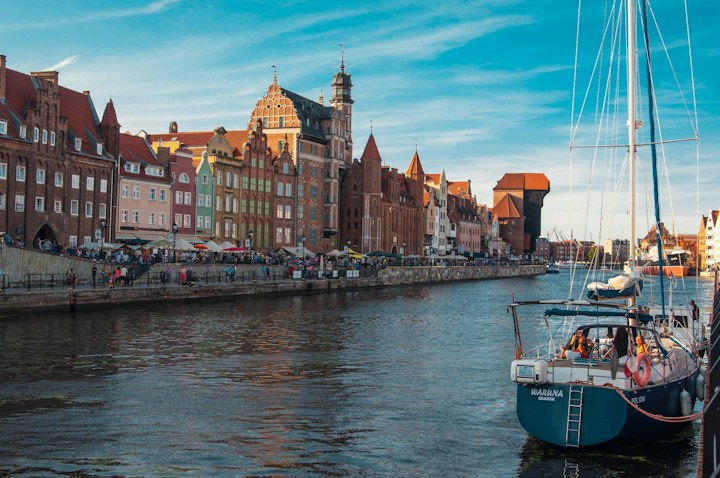
Before the waterfront wakes
A slower reading of Gdańsk, from the first reflection to the first crossing.
Read the storyBrick, Baltic light and the quiet theatre of a working waterfront.
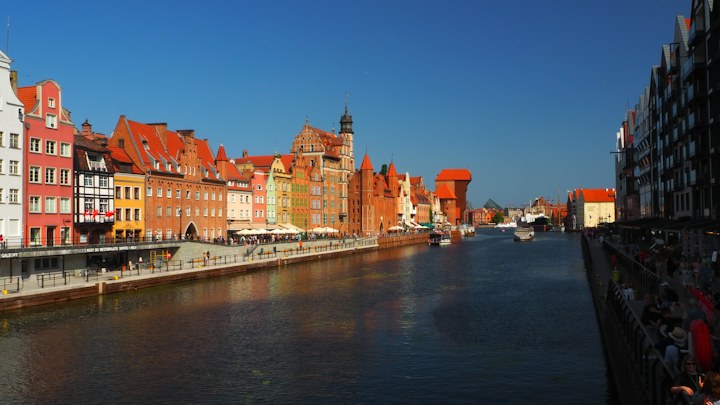
In Gdańsk, water is more than a view. It organises streets, frames buildings and makes ordinary journeys feel slightly different. The most rewarding walk moves between the waterfront and the smaller passages behind it, allowing the city to appear in fragments.
Along the Motława, tall gables turn the riverbank into a sequence of individual silhouettes. Seen from across the water, the buildings form a continuous composition; seen close up, each doorway and wall introduces another texture. Compare both scales. A crossing is not simply a way to reach the other side: it changes the relationship between foreground, water and skyline.
The busiest riverside views are only one part of the city. Walk a street inland and the sound changes. Narrower passages, brick surfaces and small thresholds slow the eye. Look for differences in paving and for the way long façades are broken into human-sized entrances. Early and late light can make an ordinary stretch of wall feel more interesting than a grand panorama.
A coastal city can change atmosphere quickly. Carry a layer, keep a sheltered alternative in mind and allow a stop to last longer than expected. This is not a list of places to race between. It is an invitation to move from the broad waterfront to the close detail, then return to the river with a different sense of scale.
A slower reading of Gdańsk, from the first reflection to the first crossing.
Read the story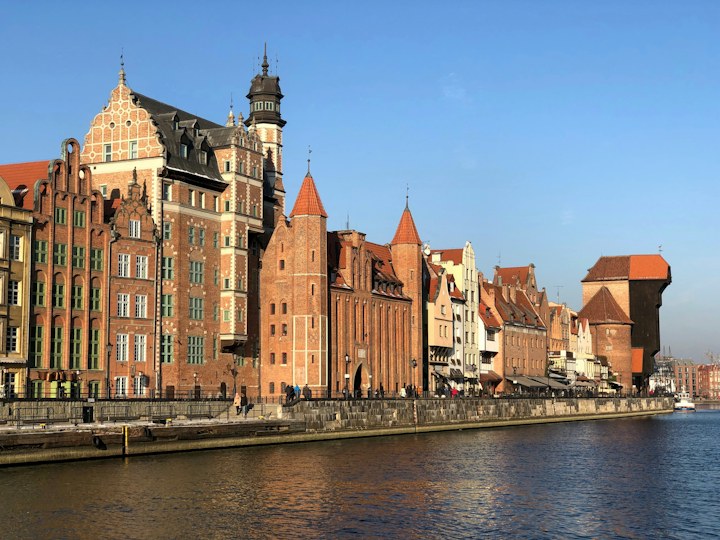
A few simple prompts for noticing more, without turning a day into a project.
Read the story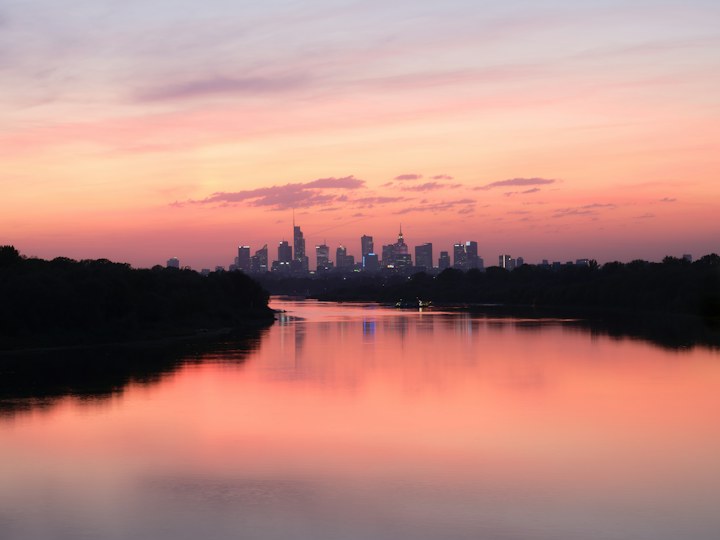
On riverbanks, long horizons and making space for an unhurried afternoon.
Read the story