Make the note smaller
A blank notebook can make a small outing feel unexpectedly ambitious. You do not need a complete record. Start with three things: one colour, one sound and one relationship between objects. A red door beside pale stone; the brief quiet after a tram has passed; a tree that makes a large building feel smaller. Specific observations need less explanation than general impressions.
Use words you would normally say. A notebook is not a performance, and an ordinary sentence is often more useful than a polished one. If drawing helps, sketch a corner or a shape without trying to make it accurate. The purpose is to hold your attention on something long enough to recognise what made you stop.
“Write down what you saw, before deciding what it means.”
Leave the map out of one minute
Maps are excellent at connecting places, but they tend to turn the space between them into a problem to solve. Once you are somewhere safe and public, put the map away for a minute. Look at the nearest edge, then the farthest one. Notice what is moving and what is still. A familiar route can become surprisingly specific when it stops being a line on a screen.
This is not a reason to ignore practical needs. Keep directions available, respect access rules and plan for weather and daylight. A little preparation makes it easier to be unhurried. The ideal amount of structure is enough to feel comfortable, with enough space left over to notice something you did not know to look for.
Return to one place
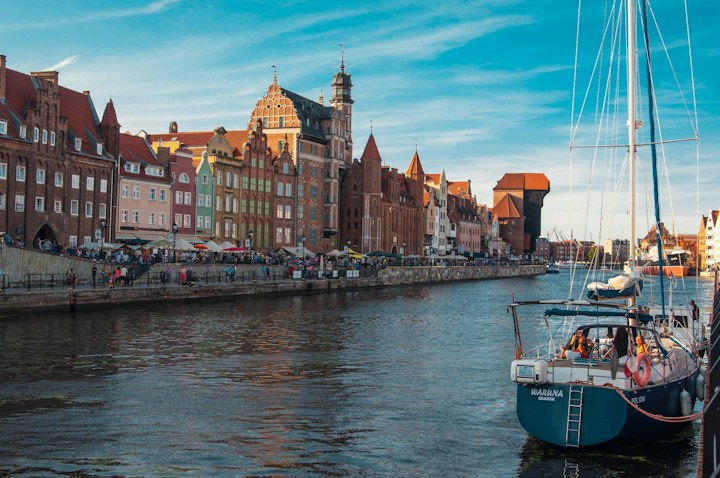
Choose a place you can revisit without a major plan: a public square, a short river path, a street near a station. Make a note on different days. Repetition reveals what a single visit cannot: a change of light, a seasonal colour, the way a place fills and empties. You begin to notice the city as a sequence rather than a fixed picture.
Do not worry about filling every page. An unfinished notebook is useful precisely because it leaves somewhere for the next observation to go. Keep the entries dated if that helps, and leave gaps when it does not. A good note is not the one that proves you saw everything. It is the one that helps you see something again.